
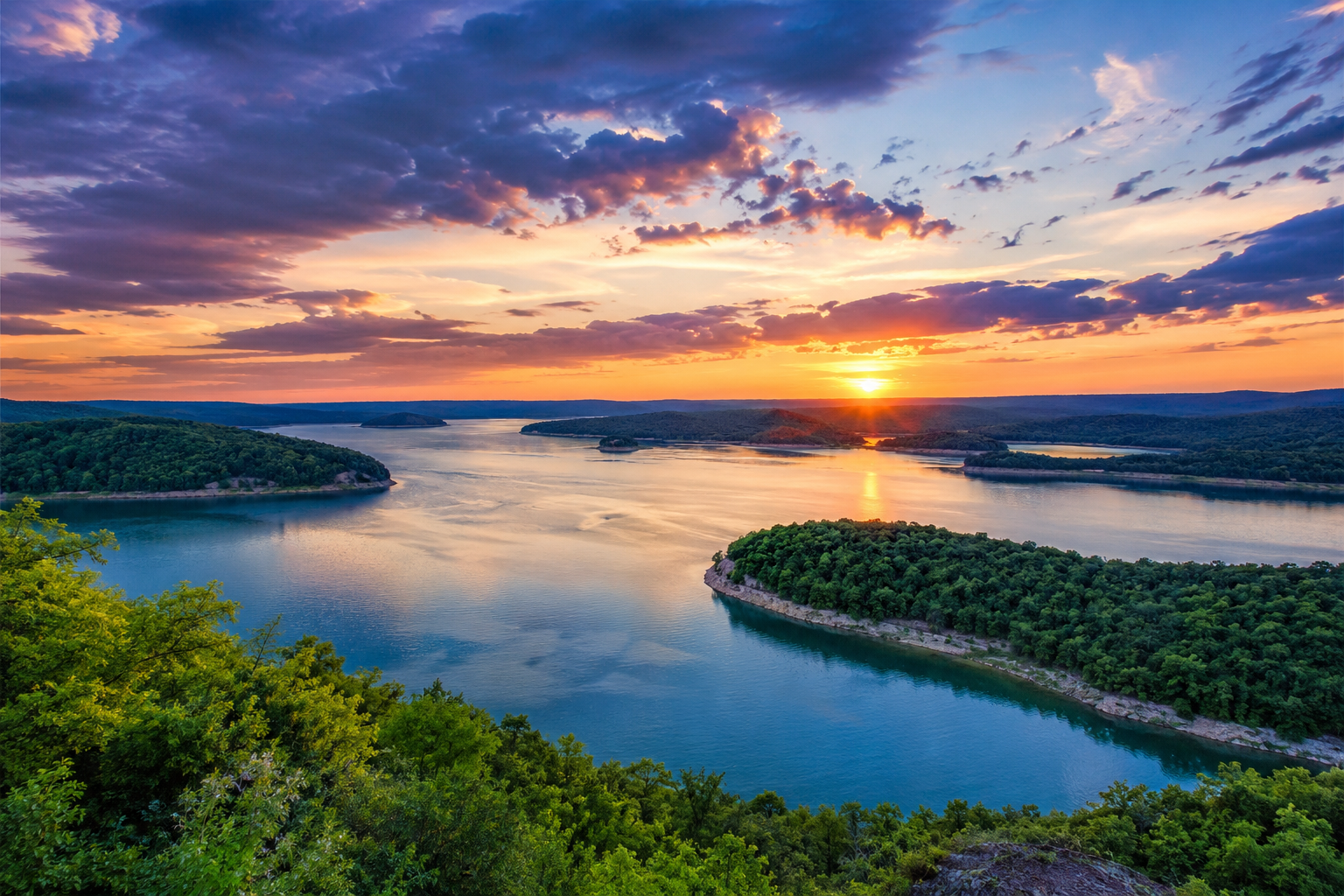
Knowing where to fish is often more important than knowing what lure to throw.
Beaver Lake stretches nearly 50 miles through the Ozark Mountains of Northwest Arkansas and contains everything from crystal-clear water near Beaver Dam to stained creek arms in the upper reaches of the reservoir. Fish location changes throughout the year as water temperatures, lake levels, baitfish movements, spawning activity, and weather conditions evolve.
Many anglers make the mistake of fishing the same area of the lake year-round. The most successful anglers understand that different sections of Beaver Lake shine during different seasons. Areas that produce excellent fishing in March may be nearly empty in July, while summer hotspots can seem lifeless during the spring spawn.
This Beaver Lake Fishing Area Guide breaks down the major sections of the lake and explains when each area typically produces the best fishing for walleye, crappie, bass, striper, bluegill, and other popular species.
Whether you are planning your first trip to Beaver Lake or looking to improve your success on the water, this guide will help you understand where fish move throughout the year and why certain areas consistently outperform others.
In this guide you’ll learn:
- The best Beaver Lake fishing areas by season
- Where to fish for walleye throughout the year
- The top areas for crappie, bass, and multi-species fishing
- How water clarity affects fish location
- Which sections of the lake perform best after rain
- Where fish move during spring, summer, fall, and winter
- How local anglers adjust to changing conditions
Beaver Lake At A Glance
eaver Lake At A Glance
Beaver Lake is one of Arkansas’ premier fishing destinations and offers a wide variety of habitat types. Understanding the lake’s major zones is the first step toward finding fish consistently.
Lower Lake
The lower end of Beaver Lake, including areas around Beaver Dam, Indian Creek, Lost Bridge, and Ventris Hollow, generally features the clearest water in the reservoir. Deep structure, bluff walls, rocky points, and offshore habitat dominate this section of the lake.
This area is often at its best during summer and winter when fish seek stable water conditions and deeper structure.
Mid-Lake
The mid-lake region around Prairie Creek, Rocky Branch, and surrounding areas provides a blend of structure and moderate water color.
Many anglers consider this section of the lake the most versatile because it can produce quality fishing throughout much of the year.
Upper Lake
The upper portions of Beaver Lake, including Starkey, War Eagle Creek, and the upper White River arm, typically contain more stained water and experience greater seasonal changes.
These areas often become major fish-holding locations during spring and fall when baitfish and spawning activity attract large numbers of game fish.
Next section should be:
Beaver Dam Area
This is where we can start adding your real-world guide knowledge:
- Dam Site
- Point 1
- Point 2
- Clifty
- Highway 187 bridge area
- Why summer fish live there
- Why winter fish live there
- Walleye
- Smallmouth
- Striper
Beaver Dam Area
On the Water
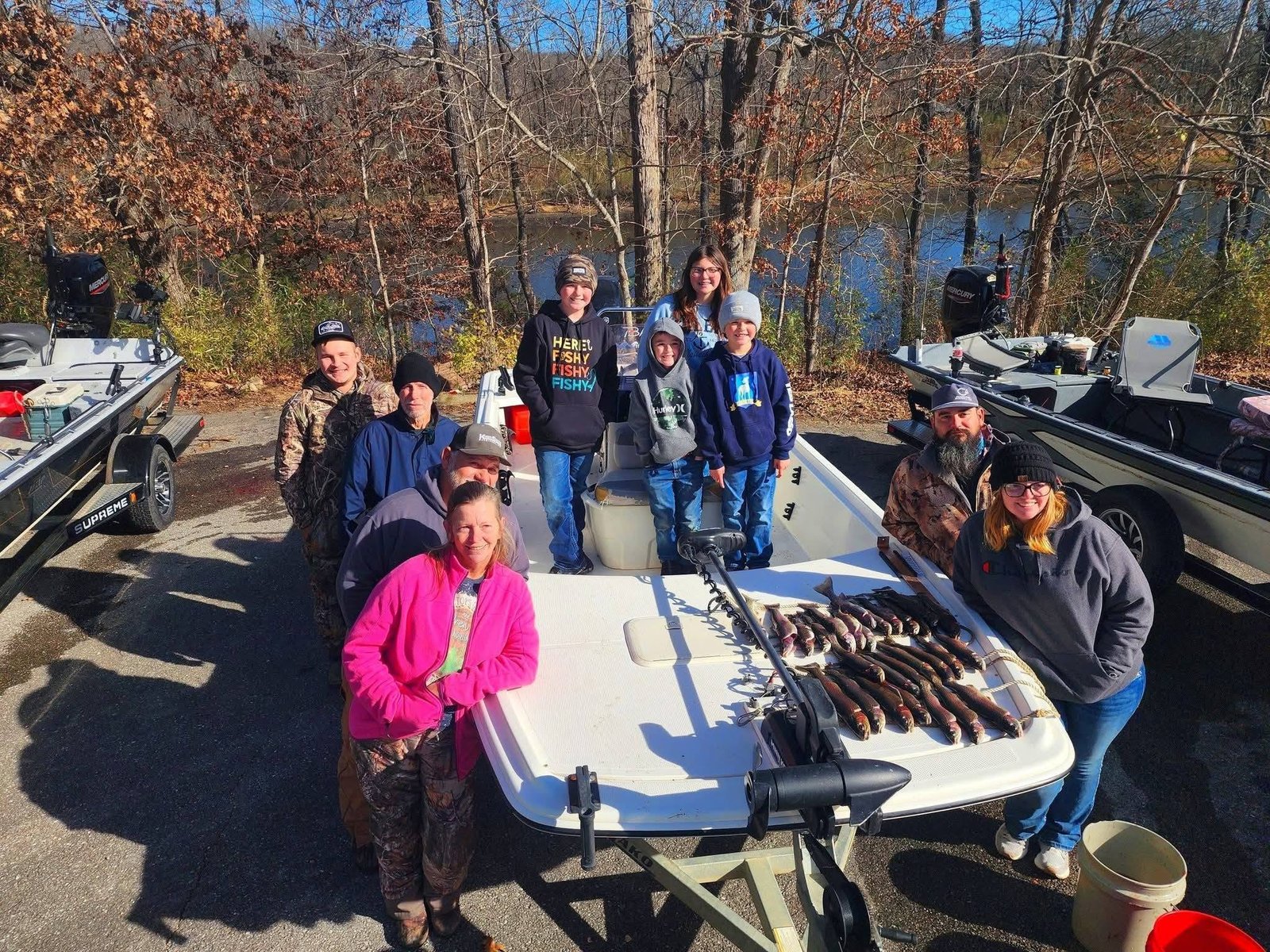
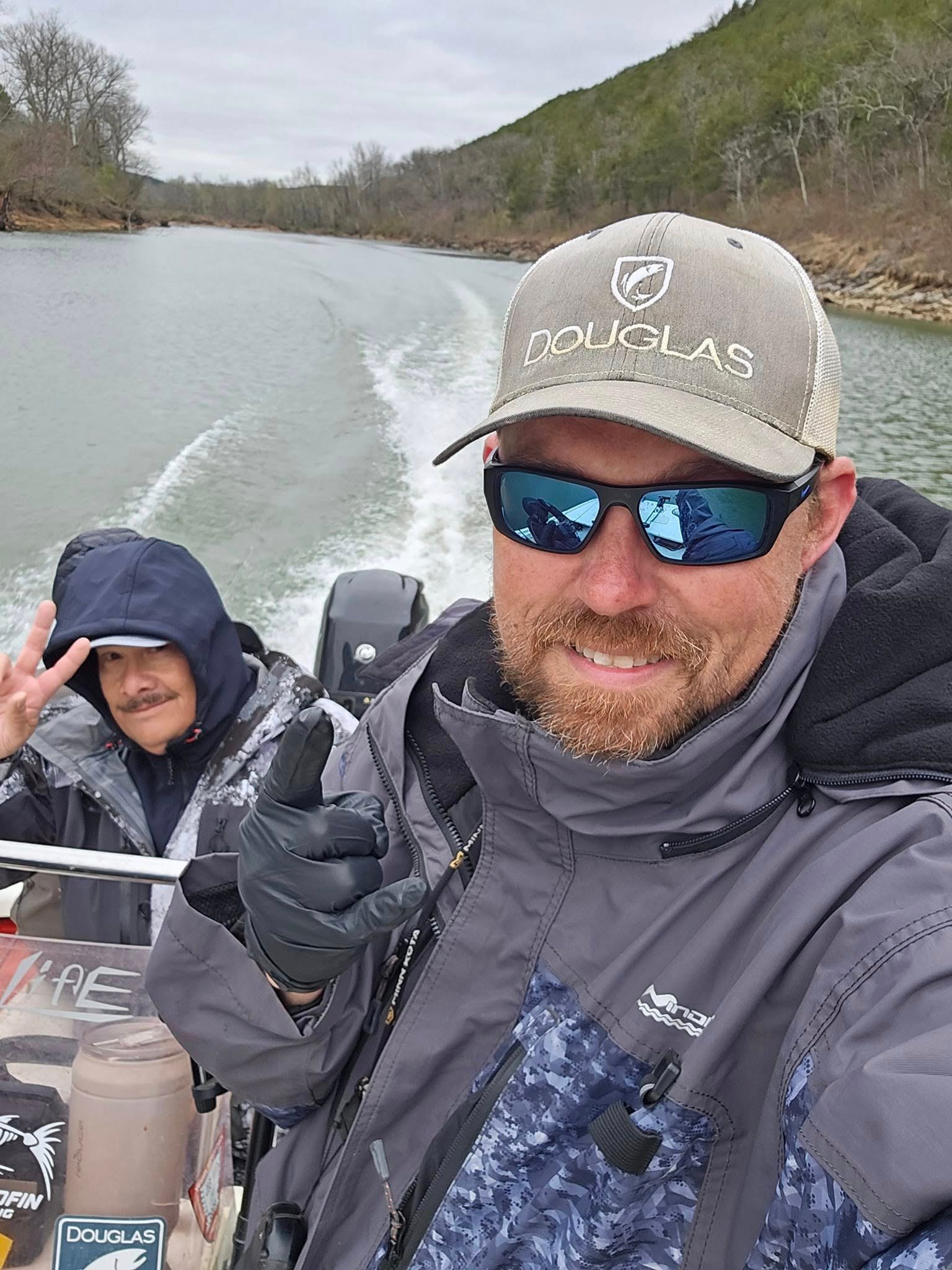
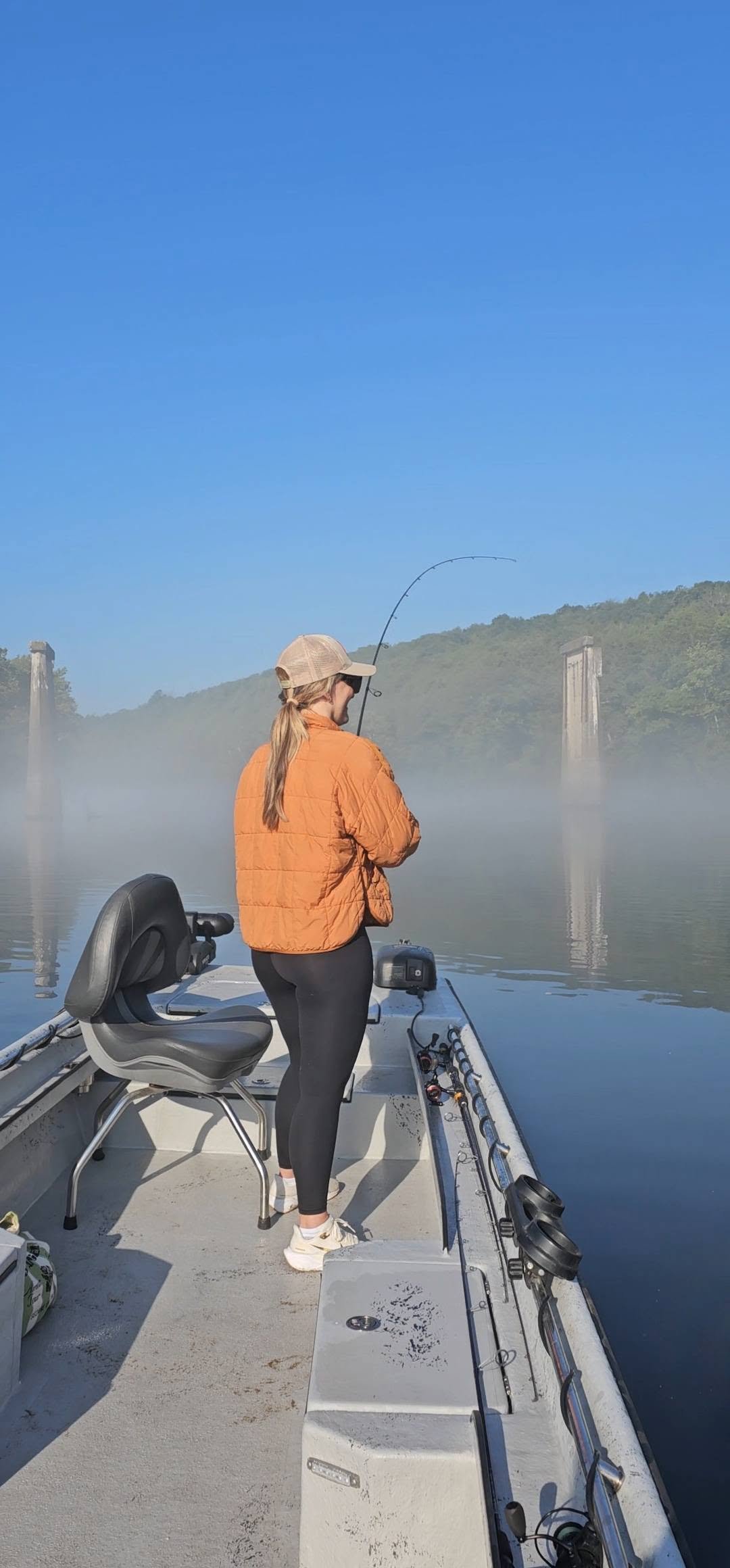
The Beaver Dam area forms the lower end of Beaver Lake and is known for its deep, clear water and abundance of rocky structure. For many anglers, this section of the lake represents some of the most consistent fishing on Beaver Lake during both summer and winter.
Water clarity is often highest near the dam, allowing fish to relate closely to structure, baitfish schools, and depth changes. Long points, bluff walls, submerged humps, creek channels, and deep-water access create ideal habitat for multiple species throughout the year.
While the area can produce fish year-round, it truly shines when water temperatures become extreme. During the heat of summer and the cold of winter, many fish concentrate in this lower-lake section where conditions remain more stable.
Key Areas Around Beaver Dam
Dam Site Area
The Dam Site area is one of the most popular launching points on Beaver Lake and provides immediate access to deep water, steep rock banks, submerged points, and offshore structure.
During summer, baitfish often suspend over deeper water, attracting walleye, striped bass, and smallmouth bass. Winter fish frequently hold near channel edges, bluff ends, and deep breaks where they can move vertically with changing conditions.
Highway 187 Bridge Area
The Highway 187 corridor creates a natural bottleneck for baitfish movement and often attracts predator fish throughout much of the year.
Points, bridge-related structure, and nearby channel swings can hold fish during seasonal transitions, particularly during spring and fall when fish move between shallow and deep-water habitats.
Clifty Area
Clifty combines deep water access with rocky shoreline habitat and is often overlooked by visiting anglers.
This area can be productive during summer when fish position near deeper structure and during winter when stable water temperatures encourage fish to remain in the lower end of the reservoir.
Best Species In The Beaver Dam Area
Walleye
Walleye often use deep points, channel edges, offshore humps, and baitfish concentrations throughout the lower lake. Summer and winter are traditionally strong periods for targeting Beaver Lake walleye near the dam.
Learn more about seasonal patterns on our Beaver Lake Walleye Fishing page.
Smallmouth Bass
The rocky habitat and clear water found near Beaver Dam create excellent smallmouth bass habitat. Bluff ends, chunk rock banks, and main-lake points can all hold quality fish throughout the year.
Striped Bass
Stripers frequently follow schools of shad and can be found roaming open water, points, and channel breaks throughout the lower end of the lake.
When To Fish The Beaver Dam Area
| Season | Fishing Quality | Why |
|---|---|---|
| Spring | Good | Fish transitioning toward spawning areas |
| Summer | Excellent | Deep water and stable conditions attract fish |
| Fall | Good | Baitfish movements create feeding opportunities |
| Winter | Excellent | Fish concentrate around deep structure |
Local Insight
One of the biggest mistakes anglers make is leaving the lower end of the lake too quickly during summer. As water temperatures rise across the reservoir, the Beaver Dam area often provides the most stable conditions on the lake. Fish may move deeper, but they rarely leave entirely.
When other parts of Beaver Lake become extremely warm or experience fluctuating water conditions, the lower end frequently continues producing quality catches for anglers willing to adjust their depth and presentation.
Related Beaver Lake Resources
Indian Creek Area
Indian Creek is one of the most well-known and productive areas on Beaver Lake. Located on the lower end of the reservoir, this section offers a combination of clear water, deep structure, long points, bluff banks, creek channels, and offshore habitat that attracts fish throughout the year.
Because of its location, Indian Creek often maintains more stable water conditions than many upper-lake areas. While spring and fall can produce excellent fishing, Indian Creek is particularly known for its summer and winter patterns when fish concentrate around deep structure and baitfish schools.
For anglers targeting walleye, smallmouth bass, and multi-species action, Indian Creek should be on the short list of areas to explore.
Why Indian Creek Produces Fish
Several factors make Indian Creek one of the most consistent fishing areas on Beaver Lake:
- Deep water located close to shallow feeding areas
- Abundant rocky structure
- Long tapering points
- Channel swings and creek channels
- Large concentrations of baitfish during summer and winter
- Stable water clarity throughout much of the year
Fish can move between feeding and resting locations without traveling far, which often keeps them in the area for extended periods.
Key Areas Within Indian Creek
Main Creek Channel
The primary creek channel serves as a travel route for both baitfish and predator fish. As seasons change, fish frequently position along breaks, bends, and nearby structure.
Secondary Points
Many secondary points inside Indian Creek become productive during seasonal transitions. These areas often serve as staging locations for fish moving between shallow and deep water.
Main Lake Points
The points near the mouth of Indian Creek frequently hold fish throughout summer and winter due to their proximity to deep water and baitfish activity.
Bluff Ends
Bluff ends can be excellent locations when fish are relating to deeper structure. These areas provide quick access to changing depths and often attract baitfish schools.
Best Species In Indian Creek
Walleye
Indian Creek is one of the better areas on Beaver Lake for anglers targeting walleye during summer and winter. Deep structure, baitfish concentrations, and access to cooler water often keep fish in the area long after spring patterns end.
Learn more on our Beaver Lake Walleye Fishing page.
Smallmouth Bass
The rocky habitat and clear water found throughout Indian Creek create ideal smallmouth habitat. Points, bluff ends, and chunk rock banks can all produce quality fish.
Spotted Bass
Spotted bass thrive in the clear-water environment of Indian Creek and can often be found around deeper structure and baitfish schools.
Striped Bass
Stripers frequently move through Indian Creek while following shad schools, particularly during warmer months.
Seasonal Breakdown
Spring
Fish begin moving shallower as water temperatures rise. Secondary points and staging areas often become productive.
Summer
One of the strongest times of year for Indian Creek. Many species concentrate around deeper structure, offshore areas, and baitfish schools.
Fall
Shad movements can create excellent feeding opportunities as fish begin following bait into more active feeding patterns.
Winter
Stable water temperatures and deep structure often keep fish concentrated and predictable.
Indian Creek vs. War Eagle Creek
One of the biggest differences between Indian Creek and War Eagle Creek is water clarity.
Indian Creek typically offers much clearer water and deeper structure-oriented fishing. War Eagle Creek often contains more color and can outperform Indian Creek after major rain events.
Many successful Beaver Lake anglers adjust their fishing locations based on changing water conditions. When heavy rainfall muddies portions of the lake, fish may reposition. Understanding these differences can dramatically improve success throughout the year.
When To Fish Indian Creek
| Season | Fishing Quality | Why |
|---|---|---|
| Spring | Good | Fish staging and moving toward spawning areas |
| Summer | Excellent | Deep structure and baitfish concentrations |
| Fall | Good | Active feeding fish following shad |
| Winter | Excellent | Stable conditions and concentrated fish |
Local Insight
Indian Creek is rarely the flashiest area on Beaver Lake, but it is often one of the most dependable. Anglers who learn the creek’s points, channel swings, and offshore structure can find fish during periods when other parts of the lake become inconsistent.
The combination of clear water, deep habitat, and year-round baitfish presence makes Indian Creek one of the cornerstone fishing areas on Beaver Lake.
Ventris Hollow Area
Ventris Hollow is one of Beaver Lake’s premier lower-lake fishing areas and has developed a reputation among serious anglers as a consistent producer of walleye, bass, and other open-water species. Located between the dam area and Lost Bridge, Ventris offers a combination of deep water, long points, submerged structure, creek channels, and bait-rich habitat.
While Ventris can produce fish throughout the year, it becomes especially important during summer when many fish move offshore and relate to deeper water. Anglers willing to leave the bank and focus on structure away from the shoreline often find some of the most consistent action on the lake.
Why Ventris Hollow Produces Fish
Several characteristics make Ventris Hollow a year-round fish-holding area:
- Access to deep water
- Abundant offshore structure
- Long main-lake points
- Nearby creek channels
- Consistent baitfish populations
- Stable lower-lake water clarity
The combination of structure and forage creates ideal conditions for predator fish throughout much of the year.
Key Areas Within Ventris Hollow
Main-Lake Points
Long tapering points extending into the main lake frequently attract baitfish and feeding predators. These points often become travel routes as fish move between shallow and deep water.
Channel Swings
Areas where creek channels swing close to structure can become holding locations for fish throughout multiple seasons. These locations provide quick access to depth changes and feeding opportunities.
Offshore Structure
Ventris contains numerous offshore humps, ridges, and structure features that hold fish during warmer months. These areas often become more productive as summer progresses and fish establish deeper patterns.
Deep Water Corridors
Fish frequently use deeper water corridors for movement throughout the year. Understanding how these travel routes connect major feeding areas can significantly improve success.
Best Species In Ventris Hollow
Walleye
Ventris Hollow is one of the better summer locations on Beaver Lake for anglers targeting walleye. Deep structure, nearby baitfish, and access to cooler water make this area attractive during warm-weather months.
For more information, visit our Beaver Lake Walleye Fishing page.
Smallmouth Bass
Rocky structure and clear water create excellent smallmouth habitat. Main-lake points, bluff transitions, and offshore structure often produce quality fish.
Spotted Bass
Spotted bass are common throughout the Ventris area and frequently relate to deeper structure and baitfish concentrations.
Striped Bass
Stripers often roam open water in pursuit of shad and can be found throughout the lower-lake corridor during much of the year.
Seasonal Breakdown
Spring
Fish use points, channel swings, and transition areas while moving toward spawning locations.
Summer
Ventris Hollow reaches peak productivity. Baitfish often concentrate over deeper water, drawing predator fish into predictable patterns.
Fall
Cooling water temperatures trigger increased feeding activity. Fish frequently follow shad schools and become more aggressive.
Winter
Deep structure continues to hold fish, especially during stable weather periods.
Understanding Summer Patterns
One reason Ventris Hollow becomes so productive during summer is the lake’s thermal layering.
As surface water warms, many fish position near comfortable temperatures and available oxygen levels. Baitfish often concentrate around these zones, attracting predator species throughout the area.
Because Ventris contains extensive deep-water habitat, fish can remain in the area throughout the hottest months while still having access to suitable conditions.
Ventris Hollow vs. Indian Creek
Both areas are productive lower-lake destinations, but they often fish differently.
Indian Creek tends to feature more defined creek structure and can be slightly more protected from wind. Ventris Hollow often shines when fish are heavily relating to offshore structure, deeper water, and open-water baitfish movements.
Experienced anglers frequently move between these two areas depending on bait location, water conditions, and seasonal patterns.
When To Fish Ventris Hollow
| Season | Fishing Quality | Why |
|---|---|---|
| Spring | Good | Fish moving through transition areas |
| Summer | Excellent | Deep structure and baitfish concentrations |
| Fall | Very Good | Active feeding fish following shad |
| Winter | Good | Fish relating to deeper structure |
Local Insight
Many visiting anglers spend too much time fishing visible shoreline cover and never explore the offshore potential of Ventris Hollow. While shoreline structure certainly produces fish, some of the area’s most consistent fishing occurs away from the bank.
As summer progresses and fish move deeper, understanding how baitfish use offshore structure can make the difference between a slow day and a memorable one.
Lost Bridge Area
The Lost Bridge area sits between the clear-water lower end of Beaver Lake and the more moderate water conditions found farther upriver. This transition zone creates a unique mix of habitat that attracts fish throughout the year and makes Lost Bridge one of the most versatile fishing areas on the reservoir.
Many local anglers consider Lost Bridge one of Beaver Lake’s most overlooked sections. The area contains long points, creek channels, submerged structure, bluff banks, and easy access to deep water. Because it serves as a natural transition zone, fish often move through the area during seasonal migrations.
While Lost Bridge can produce year-round, it is especially known for strong summer and fall fishing.
Why Lost Bridge Produces Fish
Several features make Lost Bridge attractive to multiple species:
- Transition between lower-lake and mid-lake conditions
- Numerous main-lake points
- Deep water access
- Creek channels and channel intersections
- Abundant baitfish habitat
- Mix of clear and lightly stained water
Fish can feed, travel, and seek seasonal comfort zones without moving long distances.
Key Areas Around Lost Bridge
Main Bridge Corridor
The bridge area itself acts as a natural funnel for baitfish movement and fish travel. Nearby points, channel edges, and structure can all become productive during different times of the year.
Long Main-Lake Points
Several major points extend into deeper water around Lost Bridge. These areas often hold fish during summer and fall when baitfish are concentrated nearby.
Secondary Points
Secondary points become important during seasonal transitions, particularly during spring and fall when fish move between spawning and feeding locations.
Channel Intersections
Areas where creek channels meet larger channels frequently concentrate fish because they provide travel routes and feeding opportunities.
Best Species In The Lost Bridge Area
Walleye
Lost Bridge is one of the better areas for anglers targeting summer and fall walleye. Fish frequently use deep points, structure, and nearby baitfish concentrations throughout much of the year.
For more detailed information, visit our Beaver Lake Walleye Fishing page.
Smallmouth Bass
The rocky structure and deeper water around Lost Bridge create ideal habitat for smallmouth bass. Main-lake points and bluff transitions are often productive.
Spotted Bass
Spotted bass thrive in the clear-to-moderately stained water conditions common throughout the area.
Crappie
Brush piles, standing timber, docks, and secondary structure can all hold crappie during different seasons.
Seasonal Breakdown
Spring
Fish begin moving into spawning and staging areas. Secondary points and channel-related structure often become productive.
Summer
Deep structure, offshore areas, and baitfish concentrations drive fish location throughout much of the season.
Fall
This is when Lost Bridge often shines. As shad migrate and water temperatures cool, predator fish frequently become more active and easier to locate.
Winter
Fish generally move deeper and relate closely to structure and bait concentrations.
Why Lost Bridge Excels During Fall
Fall is often one of the most exciting times to fish Beaver Lake, and Lost Bridge is frequently at the center of the action.
As water temperatures decline, baitfish begin moving throughout the lake. Predator species follow these food sources, creating feeding opportunities around points, channel swings, and major structure.
Many anglers specifically target Lost Bridge during fall because it offers easy access to both deep water and active feeding zones.
Lost Bridge vs. Ventris Hollow
Although these areas are relatively close together, they often fish differently.
Ventris Hollow frequently excels during peak summer conditions when fish are heavily focused on offshore structure and deeper water.
Lost Bridge often becomes more productive during seasonal transitions, particularly during fall when baitfish movement increases and fish begin feeding more aggressively.
Understanding when to shift between these two areas is one of the keys to consistently finding fish on Beaver Lake.
When To Fish Lost Bridge
| Season | Fishing Quality | Why |
|---|---|---|
| Spring | Good | Fish moving toward spawning areas |
| Summer | Very Good | Deep structure and baitfish activity |
| Fall | Excellent | Shad migrations and aggressive feeding |
| Winter | Good | Fish relating to deeper structure |
Local Insight
Lost Bridge is one of those areas that seems to get better the more time you spend there. At first glance it appears similar to other lower-lake sections, but anglers who learn its points, channel intersections, and seasonal baitfish movements often discover why it consistently produces quality fish.
If you’re trying to understand how fish move between the lower and mid-lake portions of Beaver Lake, Lost Bridge is one of the best places to start.
Prairie Creek to Rocky Branch Area
The Prairie Creek to Rocky Branch corridor represents the heart of Beaver Lake. Located in the mid-lake region, this area offers a blend of structure, water color, habitat diversity, and year-round fishing opportunities that make it one of the most productive sections of the reservoir.
Unlike the extremely clear lower end near Beaver Dam or the more stained upper reaches around War Eagle and Starkey, Prairie Creek and Rocky Branch often provide a balance between the two. This moderate water clarity can create excellent fishing conditions across multiple species throughout the year.
For anglers looking for a true multi-species destination, few areas on Beaver Lake can match the versatility of the Prairie Creek to Rocky Branch corridor.
Why Prairie Creek to Rocky Branch Produces Fish
This section of Beaver Lake contains nearly every type of fish-holding habitat found in the reservoir:
- Main-lake points
- Secondary points
- Creek channels
- Standing timber
- Brush piles
- Bluff banks
- Docks
- Flats
- Deep-water access
The variety of available habitat allows fish to remain in the area throughout changing seasonal conditions.
Key Areas Within The Corridor
Prairie Creek
Prairie Creek has long been one of Beaver Lake’s most popular fishing destinations. The combination of structure, protected coves, docks, and nearby deep water creates excellent habitat for bass, crappie, and other species.
Rocky Branch
Rocky Branch offers similar opportunities with extensive structure, channel edges, and fish-holding cover. The area frequently attracts anglers targeting crappie, bass, and mixed-species action.
Secondary Creeks And Coves
Numerous smaller pockets throughout the corridor provide seasonal feeding, spawning, and staging habitat. These areas often become important during spring and fall transitions.
Best Species In The Prairie Creek To Rocky Branch Area
Crappie
This corridor is widely considered one of the better crappie-producing sections of Beaver Lake. Brush piles, standing timber, docks, and submerged cover can all hold fish throughout the year.
Visit our Beaver Lake Crappie Fishing page to learn more.
Largemouth Bass
The combination of cover and moderate water clarity creates ideal largemouth bass habitat. Fish can often be found around docks, brush, timber, and shallow cover depending on the season.
Spotted Bass
Spotted bass are common throughout the area and frequently relate to structure and baitfish activity.
Walleye
Although many anglers focus on the lower lake for walleye, this corridor can produce quality fish during portions of the year, particularly during seasonal transitions.
White Bass
Schools of white bass often move through the area while following baitfish and can provide excellent action during feeding periods.
Seasonal Breakdown
Spring
Spring is one of the strongest seasons for Prairie Creek and Rocky Branch. Warming water temperatures draw fish toward spawning habitat, shallow cover, and protected coves.
Summer
Fish often transition toward deeper structure, brush piles, standing timber, and channel-related cover.
Fall
Cooling water temperatures increase feeding activity as fish follow baitfish throughout the corridor.
Winter
Fish generally move deeper but continue to use structure, brush, and channel edges.
Why This Area Is So Popular
One of the biggest advantages of the Prairie Creek to Rocky Branch corridor is consistency.
Even when one species slows down, another species is often available. Crappie, bass, white bass, and walleye can all be caught within relatively short distances of one another depending on the season.
This makes the area particularly attractive for anglers seeking action rather than targeting a single species.
Prairie Creek To Rocky Branch vs. Lower Lake Areas
The lower end of Beaver Lake often produces better clear-water and deep-structure fishing.
Prairie Creek and Rocky Branch offer more diverse habitat, more cover, and greater opportunities for multi-species fishing.
When conditions become too clear on the lower lake, many anglers find success by moving into the moderate water color and structure-rich environment found throughout the mid-lake region.
When To Fish Prairie Creek To Rocky Branch
| Season | Fishing Quality | Why |
|---|---|---|
| Spring | Excellent | Spawning activity and warming water |
| Summer | Very Good | Deep structure and cover-oriented fish |
| Fall | Excellent | Active feeding and baitfish movement |
| Winter | Good | Fish relating to deeper structure |
Local Insight
If an angler only had one section of Beaver Lake to fish throughout the entire year, Prairie Creek to Rocky Branch would be difficult to beat.
The area offers enough diversity to remain productive through changing seasons, changing water levels, and changing weather conditions. Whether you’re chasing crappie, bass, walleye, or simply looking for steady action, this corridor consistently ranks among the most dependable fishing areas on Beaver Lake.
Starkey Area
Starkey is one of the most productive and underrated fishing areas on Beaver Lake. Located farther upriver than Prairie Creek and Rocky Branch, Starkey often offers a different set of conditions than the lower end of the lake. Water color, runoff, baitfish activity, and seasonal fish movements frequently combine to make this area a favorite among local anglers.
While many visitors automatically head toward the clear water near Beaver Dam, experienced Beaver Lake anglers know that Starkey can outperform the lower lake under the right conditions.
This is especially true during spring, fall, and after significant rainfall events.
Why Starkey Produces Fish
Several factors make Starkey unique:
- More stained water than the lower lake
- Large amounts of baitfish habitat
- Creek channels and flats
- Numerous spawning areas
- Good feeding opportunities during low-light conditions
- Excellent transition zone between upper and mid-lake fish movements
The added water color often allows predator fish to feed more aggressively throughout the day compared to clearer portions of the reservoir.
Key Areas Within Starkey
Main Creek Channel
The main channel serves as a travel route for fish moving between deeper water and shallow feeding areas. Channel bends and adjacent structure often become productive throughout the year.
Secondary Points
Secondary points can be excellent staging locations during seasonal transitions, particularly during spring and fall.
Flats Adjacent To Channels
Large flats near deeper water often attract baitfish and feeding fish. These areas can become especially productive during warming trends and seasonal feeding periods.
Creek Mouth Areas
Areas where smaller feeder creeks enter the main arm frequently create current, food sources, and attractive habitat for multiple species.
Best Species In The Starkey Area
Walleye
Starkey can be an excellent area for anglers targeting walleye during portions of the spring and fall. Fish often use channel edges, points, and transition areas while following baitfish movements.
For more details, visit our Beaver Lake Walleye Fishing page.
Crappie
Crappie anglers frequently find success around brush, timber, docks, and spawning areas throughout Starkey.
Visit our Beaver Lake Crappie Fishing page for seasonal patterns and trip information.
Largemouth Bass
The stained water and abundant cover create ideal largemouth bass habitat. Fish often position around shallow cover, creek channels, and feeding areas.
White Bass
White bass frequently move through the area following schools of baitfish and can provide excellent action during feeding periods.
Seasonal Breakdown
Spring
Spring is one of Starkey’s strongest seasons. Rising water temperatures, spawning activity, and increased baitfish movement create excellent fishing opportunities.
Summer
Fish often move deeper but continue using channel edges, structure, and baitfish concentrations.
Fall
Cooling water temperatures and baitfish migrations frequently trigger aggressive feeding activity throughout the area.
Winter
Fishing can remain productive, although fish typically relate more closely to deeper water and structure.
Why Starkey Often Shines After Rain
One of the biggest reasons local anglers pay attention to Starkey is how it responds to rainfall.
Heavy rain can increase water color throughout the area and create conditions that many predator fish prefer. Slightly stained water often allows fish to feed more comfortably while reducing visibility compared to the crystal-clear lower end of Beaver Lake.
When the lower lake becomes extremely clear, many anglers find improved success by moving into Starkey’s more stained environment.
Starkey vs. Prairie Creek
Prairie Creek typically offers more moderate water clarity and a broader mix of habitat types.
Starkey often provides more color, more active shallow fish, and stronger spring and fall patterns.
Successful anglers frequently move between these two areas based on water clarity, weather conditions, and seasonal fish behavior.
When To Fish Starkey
| Season | Fishing Quality | Why |
|---|---|---|
| Spring | Excellent | Spawning activity and warming water |
| Summer | Good | Fish using deeper structure and channels |
| Fall | Excellent | Baitfish movement and active feeding |
| Winter | Fair to Good | Fish concentrated around deeper water |
Local Insight
One of the most common mistakes visiting anglers make is assuming clear water always means better fishing.
There are many days when the lower lake becomes so clear that fish become difficult to approach and less willing to feed aggressively. During those times, Starkey’s slightly stained water can provide a significant advantage.
If recent rainfall has added color to the lake or if fish seem reluctant in clearer areas, Starkey is often worth serious consideration.
War Eagle Creek Area
War Eagle Creek is one of the most famous and productive fishing areas on Beaver Lake. As one of the lake’s largest tributaries, War Eagle provides a combination of stained water, abundant forage, spawning habitat, creek channels, flats, timber, and cover that attracts fish throughout the year.
For many local anglers, War Eagle is the first area they consider during spring and one of the last areas they leave during fall.
While the lower end of Beaver Lake is known for deep, clear-water fishing, War Eagle offers a completely different experience. The additional water color, nutrient flow, and diverse habitat often create ideal feeding conditions for multiple species.
Why War Eagle Produces Fish
Several factors make War Eagle one of the most important fisheries on Beaver Lake:
- Large creek system
- Consistent baitfish populations
- Extensive spawning habitat
- Natural migration routes
- Stained water conditions
- Numerous flats, points, and creek channels
- Large amounts of standing timber and cover
Because so many habitat types exist within a relatively small area, fish can remain in the War Eagle system throughout much of the year.
Key Areas Within War Eagle
Main Creek Channel
The creek channel serves as the primary travel corridor for fish moving throughout the system. Fish often position along bends, intersections, and adjacent structure during seasonal transitions.
Flats And Shallow Feeding Areas
War Eagle contains numerous flats that become productive during warming periods, spawning activity, and baitfish migrations.
Secondary Creeks
Smaller feeder creeks frequently attract fish because they provide additional food sources, cover, and spawning habitat.
Timber And Cover
Standing timber, brush, and submerged cover throughout the creek arm create ideal habitat for crappie, bass, and other species.
Best Species In The War Eagle Area
Crappie
War Eagle is widely known as one of Beaver Lake’s top crappie destinations. Spawning habitat, timber, brush, and baitfish combine to create excellent conditions throughout much of the year.
Visit our Beaver Lake Crappie Fishing page to learn more.
Largemouth Bass
The stained water and abundant cover create ideal largemouth bass habitat. Fish often use creek channels, timber, docks, and shallow cover depending on the season.
Walleye
Although many anglers focus on the lower lake for walleye, War Eagle can produce quality fish during seasonal transitions when baitfish and feeding opportunities draw fish into the system.
White Bass
White bass frequently move into War Eagle during seasonal runs and can provide outstanding action when schools become concentrated.
Multi-Species Fishing
Because so many species use the War Eagle system throughout the year, it is one of the best locations on Beaver Lake for anglers seeking a mixed-species day on the water.
Seasonal Breakdown
Spring
Spring is arguably War Eagle’s strongest season. Warming water temperatures, spawning activity, and increased baitfish movement bring large numbers of fish into the creek system.
Summer
Fish generally move toward deeper water and channel-related structure while remaining connected to available forage.
Fall
As baitfish migrate and water temperatures cool, fish often become highly active throughout the creek arm.
Winter
Fishing can remain productive, particularly around deeper channels and structure.
Why War Eagle Excels During Spring
When water temperatures begin rising, War Eagle often warms faster than portions of the lower lake.
The combination of warming water, spawning habitat, and abundant forage attracts crappie, bass, white bass, and other species. This seasonal migration creates some of the most anticipated fishing opportunities of the year.
For many anglers, spring and War Eagle simply go hand in hand.
War Eagle vs. Starkey
Both areas are known for stained-water fishing and strong seasonal patterns, but they are not identical.
War Eagle is larger, contains more diverse habitat, and often supports greater numbers of fish during major seasonal migrations.
Starkey frequently provides similar water color and feeding conditions but on a somewhat smaller scale.
Experienced anglers often monitor both areas and adjust based on water conditions, baitfish activity, and fish movement.
When To Fish War Eagle
| Season | Fishing Quality | Why |
|---|---|---|
| Spring | Excellent | Spawning activity and warming water |
| Summer | Good | Fish relating to channels and deeper structure |
| Fall | Excellent | Baitfish migration and aggressive feeding |
| Winter | Fair to Good | Fish concentrated around deeper water |
Local Insight
One of the biggest mistakes anglers make is treating War Eagle as only a spring fishing destination.
While spring certainly receives the most attention, War Eagle can produce quality fishing throughout the year. Fall baitfish movements, post-rain feeding opportunities, and stained-water advantages often make the creek arm one of the most productive sections of Beaver Lake long after spring has passed.
When conditions become difficult on the lower end of the lake, War Eagle is often one of the first places local anglers look for active fish.
Upper White River Arm
The Upper White River Arm is where Beaver Lake begins to transition from reservoir to river. This section experiences the greatest influence from inflow, rainfall, current, and seasonal water level changes. It can be one of the most dynamic fishing areas on the lake and often fishes completely differently than the lower end near Beaver Dam.
This is where many fish begin their seasonal movements, where fresh water enters the reservoir, and where anglers can find some of the strongest spring patterns on Beaver Lake.
The Upper White River Arm rewards anglers who pay attention to changing conditions and adapt quickly as water clarity, current, and temperatures shift.
Frequently Asked Questions About Beaver Lake Fishing Areas
What is the best area of Beaver Lake to fish?
There is no single “best” area of Beaver Lake because fish location changes throughout the year. During spring, areas like War Eagle Creek, Starkey, and the Upper White River Arm are often productive. During summer and winter, many anglers focus on the lower lake around Beaver Dam, Indian Creek, Ventris Hollow, and Lost Bridge.
Where can I catch walleye on Beaver Lake?
Walleye can be found throughout Beaver Lake, but some of the most consistent areas include Beaver Dam, Indian Creek, Ventris Hollow, Lost Bridge, and portions of the mid-lake region. Fish location changes seasonally as water temperatures, baitfish movements, and spawning activity occur.
For more information, visit our Beaver Lake Walleye Fishing page.
What part of Beaver Lake is best for crappie fishing?
War Eagle Creek, Starkey, Prairie Creek, Rocky Branch, and the Upper White River Arm are among the most popular crappie fishing areas on Beaver Lake. Brush piles, standing timber, docks, and creek channels often attract crappie throughout the year.
Where is the clearest water on Beaver Lake?
The clearest water is typically found near Beaver Dam, Indian Creek, Ventris Hollow, and other lower-lake areas. Water clarity generally decreases as anglers move farther up the lake toward War Eagle Creek and the Upper White River Arm.
Which area of Beaver Lake is best after heavy rain?
After significant rainfall, many anglers focus on areas with slightly stained water such as Starkey, War Eagle Creek, and portions of the Upper White River Arm. Water color can often improve feeding conditions for predator fish.
What is the best fishing area on Beaver Lake during summer?
The lower end of Beaver Lake often shines during summer. Areas such as Beaver Dam, Indian Creek, Ventris Hollow, and Lost Bridge provide access to deeper water, offshore structure, and baitfish concentrations that attract multiple species.
Where should beginners fish on Beaver Lake?
Prairie Creek, Rocky Branch, and portions of War Eagle Creek are often good starting points because they provide access to multiple species and a variety of fish-holding habitat. Local fishing reports can help narrow down productive areas based on current conditions.
What species can I catch on Beaver Lake?
Beaver Lake supports a wide variety of game fish including:
- Walleye
- Largemouth Bass
- Smallmouth Bass
- Spotted Bass
- Crappie
- Striped Bass
- White Bass
- Bluegill
- Catfish
Different areas of the lake tend to favor different species depending on the season.
How do I know where fish are located on Beaver Lake?
Fish location is influenced by water temperature, water clarity, lake level, baitfish movements, weather patterns, and seasonal behavior. Following current fishing reports and understanding seasonal fish movements can greatly improve success.
Should I fish the upper lake or lower lake?
Both sections can produce excellent fishing. The lower lake generally offers clearer water and deeper structure, while the upper lake often provides more stained water and stronger spring and fall fishing patterns. Conditions on a given day often determine which area is most productive.
Ready To Fish Beaver Lake?
Whether you’re targeting walleye, crappie, bass, or simply want to learn more about one of Arkansas’ premier fisheries, local knowledge can make a tremendous difference.
At Busch Mountain Fishing Guide Service, we fish Beaver Lake year-round and adjust our locations based on current conditions, seasonal fish movements, water clarity, and forage activity. Instead of guessing where fish may be located, you’ll spend your time fishing productive areas with an experienced local guide.
Popular Beaver Lake Trips
- Beaver Lake Walleye Fishing
- Beaver Lake Crappie Fishing
- Beaver Lake Multi-Species Fishing
- Bass Fishing Trips
- Group Fishing Trips
Helpful Beaver Lake Resources
- Beaver Lake Fishing Conditions
- Best Time to Fish Beaver Lake
- Weekly Fishing Reports
- Virtual Fishing Coaching
Ready to get on the water?
Call 479-244-0039 or visit our Contact & Booking Page to reserve your Beaver Lake fishing trip today.