
On the Water
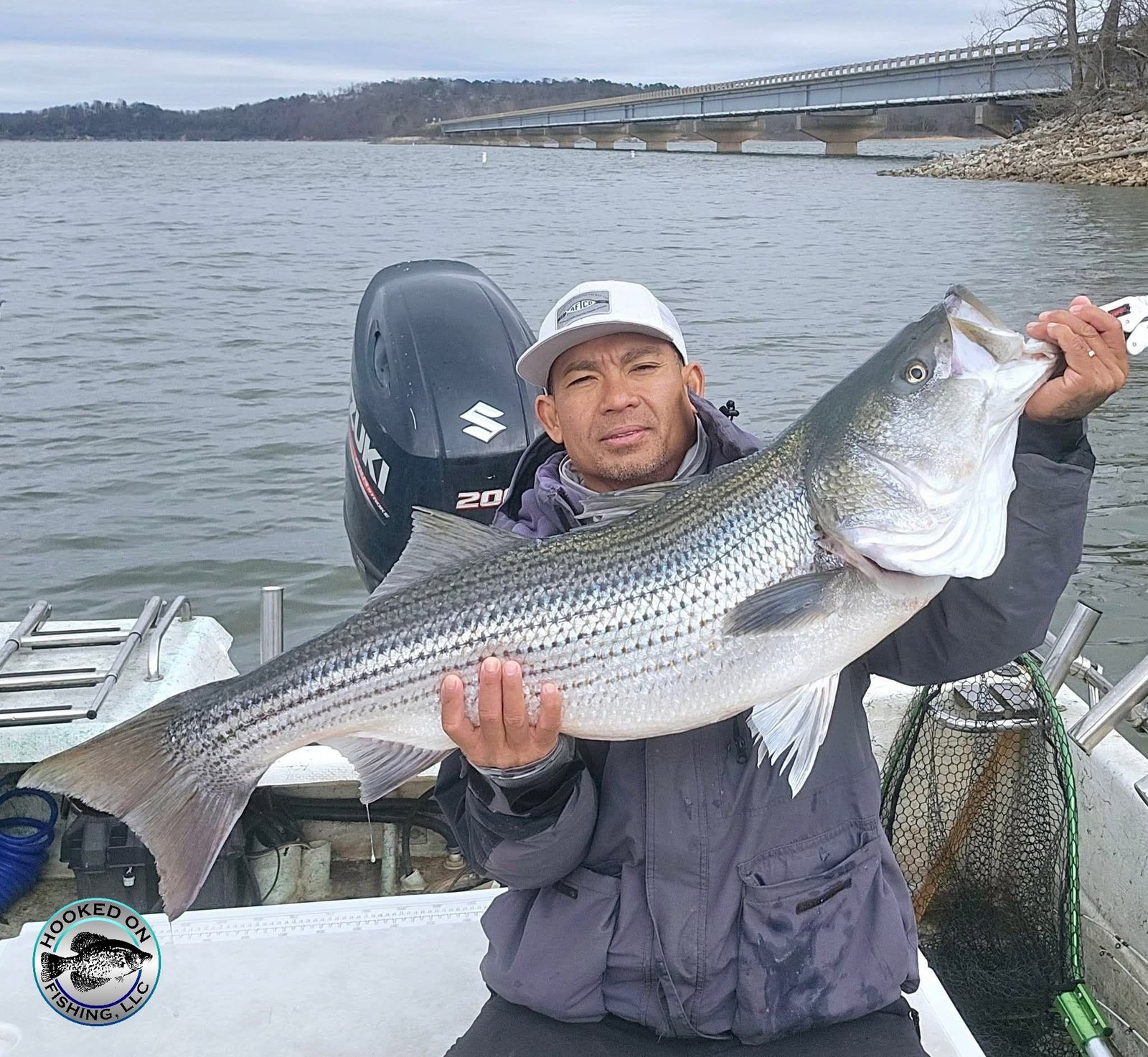
Striped bass are one of the most powerful and exciting fish that swim in Beaver Lake. Their hard-fighting nature, impressive size, and open-water habits attract anglers from across the country each year.
However, striped bass can also be one of the most vulnerable fish species during the summer months. Many anglers are surprised to learn that a striper released after a long fight may not survive if proper catch-and-release practices are not followed.
Understanding how temperature, oxygen levels, fish handling, and fight time affect striped bass survival can help anglers protect this valuable fishery and ensure future generations can enjoy Beaver Lake striper fishing.
Why Summer Is Hard On Striped Bass
Unlike largemouth bass, crappie, or bluegill, striped bass require large amounts of oxygen.
During summer, Beaver Lake develops layers of water with different temperatures and oxygen levels.
As surface water temperatures rise above 80 degrees, stripers are often forced to seek deeper water where temperatures are more comfortable. Unfortunately, deep water may contain lower oxygen levels, creating additional stress on the fish.
This combination of heat and oxygen demand makes stripers particularly vulnerable during the summer months.
Understanding Thermal Stress
Thermal stress occurs when fish are exposed to water temperatures that increase their metabolic demands.
When water temperatures climb:
- Fish require more oxygen
- Recovery time increases
- Stress hormones rise
- Mortality risk increases
A fish may appear healthy when released but still die hours later if stress levels become too severe.
Fight Fish Quickly
One of the most important factors affecting survival is fight time.
Anglers often enjoy battling large stripers, but extended fights can severely exhaust fish.
Better Catch And Release Practices
- Use appropriately sized tackle
- Avoid unnecessarily light gear
- Maintain steady pressure
- Land fish efficiently
Reducing fight time allows fish to retain more energy for recovery.
Minimize Air Exposure
Fish breathe underwater.
Every second spent out of the water increases stress.
Research has shown that reducing air exposure can significantly improve survival rates.
Best Practices
- Keep fish in the water whenever possible
- Prepare cameras before landing the fish
- Take quick photographs
- Return fish immediately
A good rule is simple:
If the fish can’t breathe, the clock is ticking.
Handle Stripers Carefully
Striped bass are large fish with considerable body weight.
Holding large fish vertically by the jaw can place stress on internal organs and skeletal structures.
Proper Support
- Support the belly with one hand
- Support the tail or jaw with the other
- Avoid dropping fish on boat decks
- Keep fish wet whenever possible
The Importance Of Livewells
Many anglers temporarily place fish in livewells before release.
During summer, poorly managed livewells can quickly become dangerous.
Livewell Tips
- Use fresh lake water
- Maintain circulation
- Avoid overcrowding
- Limit holding time
Warm water and low oxygen conditions can rapidly increase stress.
Reviving A Striper Before Release
Sometimes a fish needs assistance before it is ready to swim away.
Signs of fatigue include:
- Rolling on its side
- Difficulty maintaining balance
- Weak swimming movements
Revival Technique
Hold the fish upright in the water.
Allow water to flow naturally through the gills while supporting the fish.
Do not force the fish rapidly forward and backward.
Wait until the fish is capable of maintaining balance and swimming away under its own power.
Why Deep-Caught Stripers Require Extra Care
Fish caught from deeper water may experience additional stress during the fight and landing process.
Rapid depth changes can affect fish differently depending on depth, water conditions, and seasonal patterns.
Anglers targeting deep summer fish should pay close attention to fish condition and minimize handling time.
Beaver Lake Striper Conservation
Beaver Lake supports one of Arkansas’ most popular striped bass fisheries.
Responsible catch-and-release practices help maintain quality fishing opportunities for everyone.
Small improvements in fish handling can have a significant impact on survival rates across the entire fishery.
Every released fish that survives has the potential to be caught again, grow larger, and contribute to future fishing success.
Frequently Asked Questions
Do striped bass survive catch and release?
Yes, many striped bass survive catch and release when handled properly. Survival rates generally improve when fish are landed quickly, handled carefully, and released promptly.
Why are stripers more vulnerable during summer?
Warm water increases oxygen demand while simultaneously creating more stressful environmental conditions.
How long should a striper stay out of the water?
As little time as possible. Quick photographs and immediate release generally improve survival.
Should I keep a deeply exhausted striper?
Anglers should always follow current Arkansas regulations. If a fish appears unlikely to survive, consult current regulations and make ethical decisions within legal limits.
What water temperatures stress striped bass?
Stress generally increases as water temperatures rise into the upper summer ranges and oxygen availability becomes limited.
Help Protect Beaver Lake’s Striper Fishery
Striped bass are one of Beaver Lake’s most exciting game fish. By reducing fight times, minimizing air exposure, handling fish carefully, and practicing responsible catch-and-release techniques, anglers can help improve survival rates and protect this valuable fishery for years to come.